Treatment Planning
Partial dentures or an implant bridge for a few missing teeth
Missing a few teeth? Compare partial dentures and implant bridges, including assessment, daily care, risks and questions to ask at Dapto Dentists.
8 November 2026
By Dr Beena Kurian, Dentist
If you're missing a few teeth, you may be weighing up a partial denture against a bridge supported by implants. You don't have to choose before your first appointment. Start with what matters to you: taking something out at night, caring for it each day, the treatment involved and the cost.
The short answer
A partial denture is removable and replaces some missing teeth. An implant bridge uses dental implants to support replacement teeth. Neither is the right choice for everyone: your remaining teeth, gums, bone, medical history and daily care all matter. Our denture information and implant information explain why an individual assessment comes first.
The practical question is which option fits your mouth and the care you're able to manage, rather than which treatment sounds more impressive. Ask us to explain the alternatives alongside any recommendation.
How does a partial denture differ from an implant bridge?
A partial denture replaces missing teeth while you still have some natural teeth. It can be made from plastic, metal or a combination, and commonly has clasps that hold onto remaining teeth. The Victorian Department of Health's Better Health Channel denture guidance explains that those teeth and the gums need to be healthy enough to support it.
A bridge replaces missing teeth using neighbouring teeth or implants for support, where suitable. An implant is an artificial tooth root; it is not the same thing as the replacement tooth or bridge attached to it. Our crowns and bridges page and implant page describe these different parts.
Ask your dentist to show you which parts of the proposed restoration are supported by natural teeth and which by implants. Also ask whether the replacement is removable by you or is fixed in place. The word 'implant' alone doesn't answer that question.
What gets checked before either option is recommended?
The assessment looks beyond the gap. Our implant guidance identifies gum health, bone, medical history, bite, smoking and oral hygiene as factors in planning. Our bridge guidance also describes checking the strength and stability of supporting teeth or implants.
For a partial denture, the remaining teeth and gums need assessment too. Better Health Channel explains that denture measurements begin after the dental practitioner checks the tissues and teeth that will support it. Missing several teeth doesn't automatically make a denture suitable, just as wanting an implant bridge doesn't establish that implants are suitable.
Tell us about relevant health conditions, medicines, previous dental care and any difficulties with your current denture. Our contact page explains how that information helps prepare for an appointment. Ask how to share health details privately rather than putting a medical history into the website form.
What appointments and healing should I ask about?
Dentures usually take several visits for measurements and fitting. If teeth need removal, the timing may change. Better Health Channel describes both waiting for tissues to heal and immediate dentures made before removal. An immediate denture may need adjustment, relining or replacement as the mouth changes.
For implants, ask for the proposed stages rather than assuming the bridge is fitted at the first visit. Dapto's implant information describes planning, placement, healing and restoration as matters to discuss, along with timing and alternatives. We can't give a personal timetable without an assessment.
Useful questions are: 'What happens at each appointment?', 'What will I use while treatment is underway?' and 'Which parts of the timetable depend on healing?' If work, caring responsibilities or travel make repeated visits difficult, mention that before agreeing to a plan.
What are the drawbacks and risks?
A new denture can feel unfamiliar, and eating and speaking may take adjustment. It can also cause sore areas or become loose. Better Health Channel advises returning to the dental clinic for adjustments if eating causes a sore spot. It also recommends assessment for pain, poor fit, bleeding gums or swelling. Don't treat a painful denture as something you simply have to put up with.
Implant treatment involves surgical and restoration risks. The Australian Dental Association's South Australian branch discusses implants failing to integrate with bone and surgical damage to nearby structures. It also describes replacement teeth chipping or fracturing and screws becoming loose. These are possible complications, not predictions about your own treatment.
Ask which risks apply to your situation, how a complication would be managed and what further care could cost. The same ADA guidance stresses ongoing maintenance and the possibility of replacing components. An implant bridge shouldn't be chosen on the assumption that it will never need more work.
How will daily care differ?
A removable denture comes out for cleaning. Better Health Channel advises cleaning it morning and night, taking it out before sleep and cleaning your remaining natural teeth too. It recommends a denture brush with mild soap and water or denture cleaning solution; toothpaste can scratch the denture. Ask for instructions for your particular denture and how often its fit should be checked.
Implants also need maintenance. Our implant page makes ongoing care part of the planning conversation. Ask the dentist to demonstrate how to clean your proposed bridge and the areas around its supports, and explain the follow-up appointments. If reaching the back of your mouth or using cleaning aids is difficult, say so while you're comparing options.
Rather than asking only 'Which is easier?', ask 'Can you show me what I would have to do every day?' That gives you something concrete to consider at home.
How do I compare the quotes?
Ask for the proposed treatment and its costs to be explained together. Dapto's implant information includes costs, maintenance, risks and alternatives in the discussion before deciding. Our denture page notes that fees and private health benefits vary, so check your own details rather than assuming cover.
Use these questions when looking at the plan:
- What treatment is included, and what is a separate item?
- Are any preparations or temporary replacements proposed?
- What adjustments and follow-up visits are included?
- What maintenance or replacement costs should I allow for later?
- What other options are suitable, including a tooth-supported bridge or monitoring where appropriate?
Our guide to understanding a treatment plan can help you prepare for that conversation. You can take the questions away and return to them before deciding.
Arrange a tooth-replacement conversation in Dapto
Call Dapto Dentists on 02 4288 0737 or use our contact page. We're at 35 Baan Baan Street, Dapto NSW 2530. You can say, 'I'm missing a few teeth and would like to compare a partial denture with a bridge. What appointment should I book?'
If it's been a while since your last visit, our first-visit-back guide covers what to gather beforehand. Your appointment can begin with the gap and your questions; you don't need to arrive with a treatment choice.
Sources and scope
Sources checked 8 November 2026. General information for adults comparing tooth-replacement options; an examination is needed for personal advice, suitability and a treatment plan.
- Better Health Channel: Dentures, Victorian Department of Health, reviewed 4 August 2026: types, fitting, adjustment, complications and care. Reference: www.betterhealth.vic.gov.au. Original wording with reference under the Internet reproduction terms.
- Australian Dental Association, South Australian branch: The top five complaints – Implants: complication examples, maintenance and alternatives. Complaint observations aren't used here to estimate personal risk.
- Dapto Dentists: dentures, crowns and bridges, dental implants and contact information: local services, assessment and booking details.
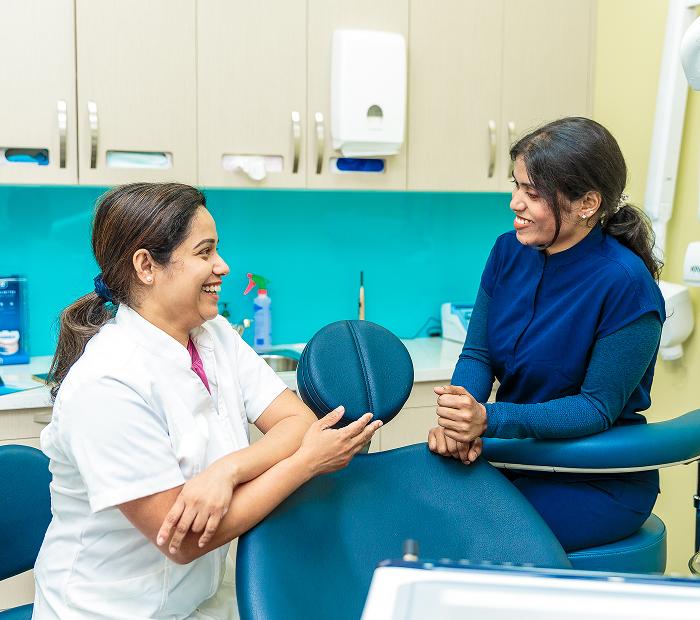
- Dapto Dentists team page: author identity. The existing denture-service photograph is reused as a consultation image; it does not illustrate a treatment result.