Treatment Planning
Root canal or extraction for a back tooth: what to ask before deciding
Been told a back tooth needs a root canal or could come out? Learn what each option involves, the risks and the questions to ask at Dapto Dentists.
16 November 2026
By Dr Beena Kurian, Dentist
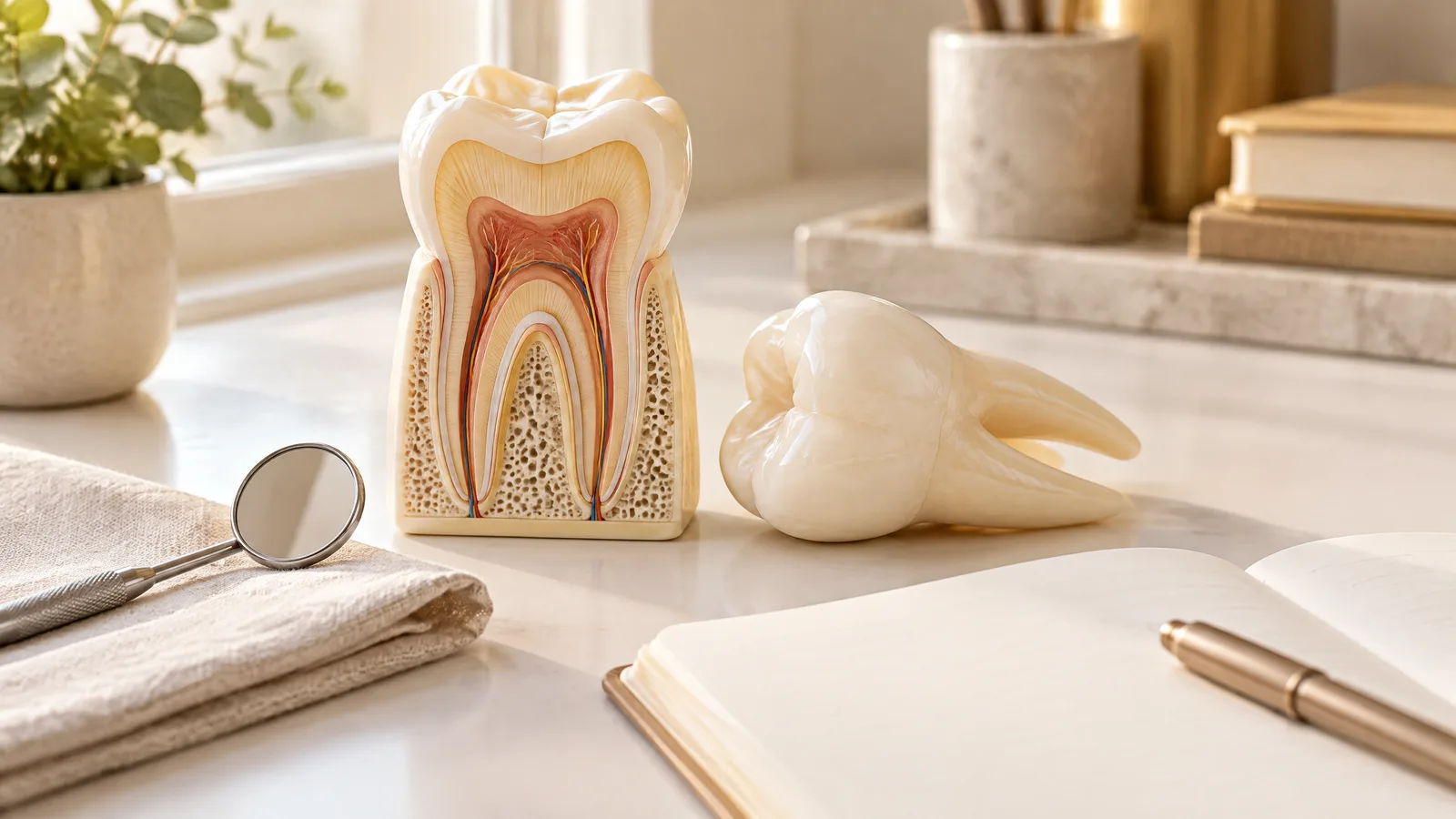
If you have just heard that a sore back tooth could have root canal treatment or be taken out, it is normal to want the quicker option and to worry about the cost of both. You do not have to decide in the chair without understanding what each choice means for that tooth.
Healthdirect describes root canal treatment as a way to help save a damaged or infected tooth, and says you could choose to have a badly damaged or infected tooth removed instead. Our root canal treatment information lists extraction, monitoring in limited circumstances or referral as possible alternatives, and says your dentist will explain options, alternatives and likely fees before treatment proceeds. Which option suits your tooth depends on an examination.
What does each option actually involve?
Root canal treatment removes infected or damaged soft tissue, called pulp, from inside the tooth. Healthdirect's root canal guide explains that the canals are cleaned, shaped and filled, and the tooth is then restored with a filling or crown to protect it. It usually takes a few appointments, with a temporary filling between visits if more than one session is needed.
An extraction removes the whole tooth. Healthdirect's tooth extraction guide says it is usually done under local anaesthetic at the dental clinic, although a more complicated extraction may need a general anaesthetic in hospital. Healthdirect says the wound usually takes up to two weeks to heal.
Healthdirect says both are usually done with local anaesthetic to numb the area. If you feel anxious, our root canal page notes that your dentist can discuss comfort options with you.
Why might the dentist suggest saving the tooth?
Ask what the examination and x-ray have shown. Healthdirect lists decay, an injury, a crack and repeated dental work that has harmed the pulp as reasons root canal treatment may help. Our root canal page lists persistent pain, lingering sensitivity to hot or cold, gum swelling near the tooth and deep decay or large fillings as reasons the treatment may be discussed.
A useful question is: 'What condition is the rest of this tooth in, and how would it be restored afterwards?' Healthdirect explains that a filling or crown goes on top once the canals are sealed. Our root canal FAQs note that a crown is often discussed after treatment to protect the remaining tooth, so ask whether that applies to yours and include it in the cost discussion.
Antibiotics are not a substitute. Healthdirect states that antibiotics alone do not work to clear a root canal infection.
When might removal be the option discussed?
Healthdirect lists bad gum disease, bad tooth decay, a deep infection, a broken tooth and trauma among the reasons a tooth may need to come out. It also notes that in some cases root canal treatment is not enough to treat a significant infection, and the tooth then needs to be removed.
Before an extraction, Healthdirect says your dentist looks at the tooth and surrounding gums, checks your medical history and takes x-rays. Healthdirect's guides ask you to tell your dentist about your health conditions and medicines before either treatment.
If removal is recommended, ask: 'What makes this tooth unsuitable to keep?' and 'What would happen with the gap?' The answers help you compare the two paths fairly.
What are the risks and limits of each choice?
Neither option comes without possible problems. For root canal treatment, Healthdirect lists too much or too little filling material needing more treatment, a small instrument becoming stuck in the canal, injury to the root, discolouration of the tooth and infection coming back. It says you may feel some discomfort afterwards, which usually gets better quickly.
After an extraction, Healthdirect lists pain, swelling, infection, bleeding and short-term numbness as the most common complications. It advises speaking to your dentist about ongoing very bad pain, which may be dry socket, a lot of bleeding, a fever over 38°C, or swelling that does not go down or gets worse.
These are possibilities, not predictions about your tooth. Ask which of them matter most in your situation.
What happens to the gap if the tooth comes out?
Healthdirect notes that if a tooth needs to be removed, you may need further treatment to replace it. That is worth raising before the extraction, not after, because it can change both the timeline and the total cost you are comparing.
Ask whether replacing this particular tooth would be recommended, and what the options would be. We offer dentures, bridges and dental implants, and each needs its own assessment. Our article on partial dentures or an implant bridge covers the questions to ask about replacing missing teeth.
How do I compare the costs?
Ask for a written quote for each option before treatment. Healthdirect suggests asking for the item numbers so you can check them with your health fund. It also notes that an extraction at the dental clinic may fall under general dental (extras) cover, while surgical removal is usually considered major dental.
For a fair comparison, ask what each quote includes:
- For root canal treatment: the number of visits, the temporary filling and the final filling or crown.
- For extraction: the removal itself and any follow-up visit.
- For both: what a replacement tooth, crown or other future treatment might add.
- What happens to the plan and cost if something changes during treatment.
Our treatment-plan guide has more questions for comparing a recommendation with its alternatives.
Can I wait before deciding, and when should I call?
Ask your dentist what waiting would mean for this tooth. Healthdirect warns that an untreated root canal infection can lead to ongoing inflammation and damage around the tooth, and that without treatment the tooth might need to be removed.
If you have severe pain or swelling, Healthdirect advises making an urgent appointment with your dentist. Mention swelling, fever or a pimple-like bump on the gum when you call, so the team understands what is happening.
If the tooth already has a large filling and you are weighing up a crown, our article on a crown or a large filling on a back tooth covers that separate conversation.
Talk through your options at Dapto Dentists
Call 02 4288 0737 or use our contact page to ask about an appointment at 35 Baan Baan Street, Dapto NSW 2530. You could say: 'I have a back tooth that might need a root canal or an extraction, and I would like to understand both options and the costs.'
Bring your questions, a list of your medicines and any quotes you already have. The aim is to leave knowing why an option is recommended for your tooth, what it involves and what it may cost.
Sources and scope
Sources checked 16 November 2026. General information for adults discussing a damaged or infected back tooth, not personal advice or confirmation that either option is suitable for you. Your dentist needs to assess your tooth and explain the options, risks, timing and costs.
- Healthdirect Australia: Root canal treatment, last reviewed February 2025: what the treatment involves, reasons, complications, alternatives and delay.
- Healthdirect Australia: Tooth extraction, last reviewed February 2025: reasons, what happens, healing, complications, when to call and costs.
- Dapto Dentists: root canal treatment, crowns and bridges and contact details.
- Dapto Dentists team page: Dr Beena Kurian is a dentist and the practice's principal dentist.