Treatment Planning
Wisdom tooth assessment: what the dentist looks at before suggesting removal
Not every wisdom tooth needs to come out. Learn what a dentist checks at a wisdom tooth assessment, the risks of removal and the questions to ask in Dapto.
17 November 2026
By Dr Beena Kurian, Dentist
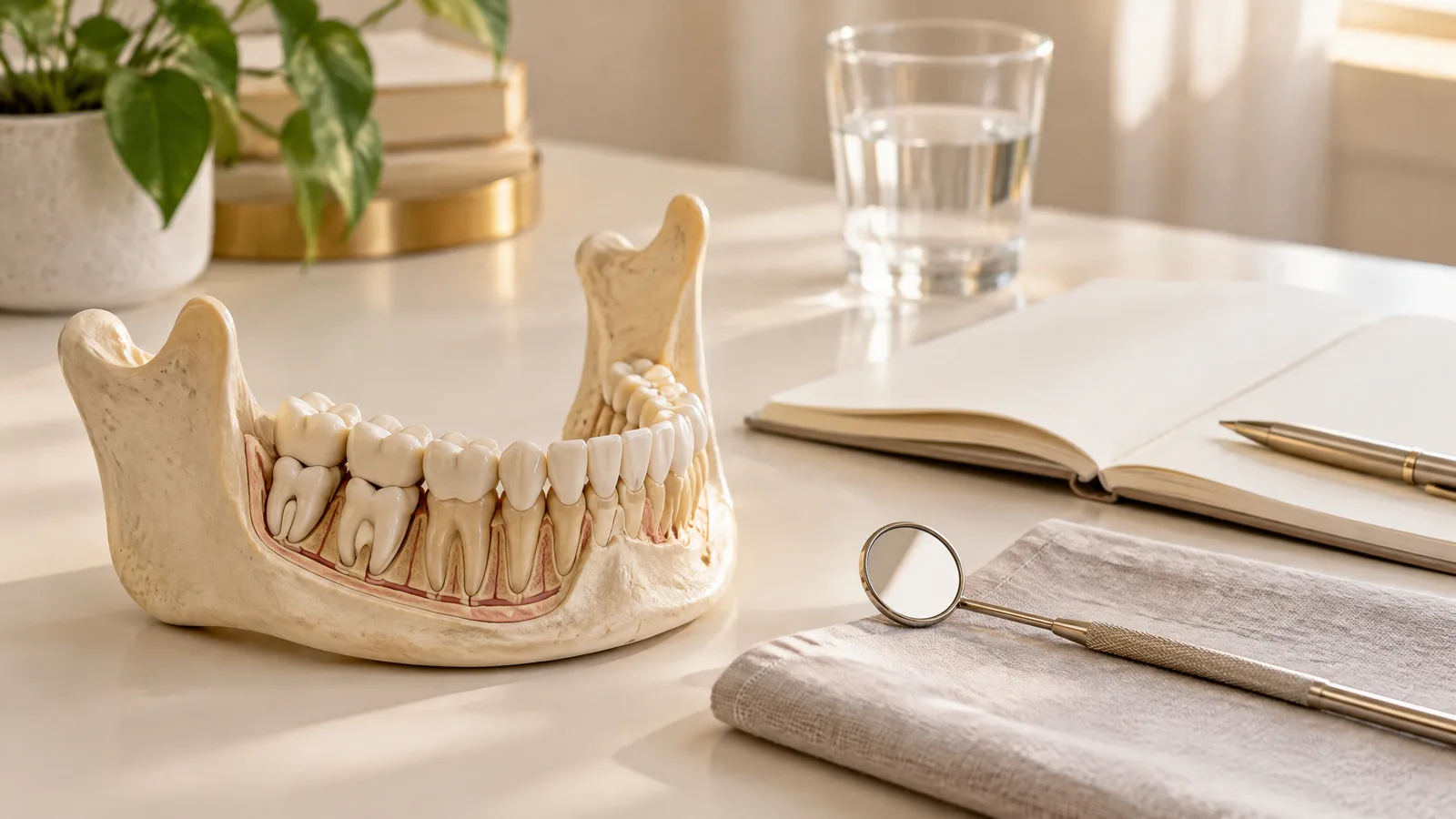
A common question is whether wisdom teeth have to come out, often because a friend or family member had theirs removed. The honest answer is that it depends on what is happening with your own teeth, and that is what a wisdom tooth assessment is for.
The Better Health Channel notes that not everyone has wisdom teeth, and that not all wisdom teeth cause problems or need to be removed. Our wisdom tooth information says the same: some can be monitored, and removal is discussed when there is pain, infection, decay, crowding or impaction. Whether removal suits you depends on an examination.
What are wisdom teeth, and why can they cause trouble?
Wisdom teeth are the molars at the very back of the mouth. Healthdirect's guide to removing wisdom teeth says they normally come through in your late teens or early twenties.
Healthdirect explains that some wisdom teeth do not come through fully and get stuck, or impacted, against other teeth or bone, which often leaves a flap of gum over the tooth. It says lower wisdom teeth take longer to come through and are more likely to be impacted, which makes repeated infections more likely.
The Better Health Channel's wisdom teeth page adds that food and bacteria can get stuck between a wisdom tooth and the tooth next to it, which can lead to decay and a gum infection called pericoronitis.
What does the dentist look at during the assessment?
Our wisdom tooth page says wisdom teeth can be assessed for pain, infection, crowding, decay or impaction. In practice, that means looking at a few things together:
- Your symptoms. Pain, swelling, jaw stiffness or a bad taste near the back of the mouth, and how often they come back.
- The gum around the tooth. Whether there is redness, swelling or a gum flap that traps food.
- The tooth next door. Whether decay or pressure is affecting the molar in front of the wisdom tooth.
- How easy the area is to clean. Healthdirect lists a tooth position that makes cleaning difficult as one reason a wisdom tooth may need to come out.
- An x-ray. The Better Health Channel says x-rays help to tell if wisdom teeth might cause problems, including how the tooth sits and whether it is impacted.
- Your health history and medicines. Healthdirect asks you to tell your dentist if you take or have taken cancer medicines or bone medicines such as bisphosphonates, because these increase the risk of a rare jaw complication.
When might removal be suggested?
Healthdirect lists reasons a wisdom tooth may need to be removed, including repeated or serious gum infection, tooth decay, a tooth that grows out too far and damages the cheek or gum, a position that makes it difficult to clean, and a cyst near the tooth. The Better Health Channel also lists pain, infection and damage to other teeth.
A useful question to ask is: 'What did you see on the x-ray and in my mouth that makes you suggest removal for this tooth?' If more than one wisdom tooth is involved, ask about each tooth separately. The answer may be different for each one.
Are there other options besides removal?
Sometimes yes. The Better Health Channel says your oral health professional may recommend keeping a watch on a tooth in case it looks like causing problems later. Our FAQs also note that some wisdom teeth can be monitored.
For an infected area, the Better Health Channel describes improving cleaning around the tooth, having the area cleaned by a dentist and, sometimes, antibiotics. It also notes the infection may keep coming back if a problem tooth is not removed. Healthdirect describes surgical alternatives in some cases, such as removing the gum lying over the tooth or removing only the crown of the tooth.
Ask what monitoring would involve for you, how often the tooth would be checked and which signs would mean you should call sooner.
What are the risks of having a wisdom tooth removed?
Removal is a surgical procedure and has risks. Healthdirect lists bleeding, swelling, infection, bruising and pain. It also lists dry socket, where the socket does not heal well, difficulty opening the mouth fully and jaw stiffness, a root fragment being left in place, and damage to nearby teeth.
For lower wisdom teeth, Healthdirect explains that damage to nerves can cause loss of feeling in the lip, chin or tongue and a change in taste. It says any damage is usually temporary, but full recovery can take up to 18 months. The Better Health Channel notes that dry socket happens more often in people who smoke or who have difficulty healing.
These are possibilities, not predictions about your tooth. Ask which risks apply most to your situation, given where the tooth sits.
What does the procedure and recovery involve?
Healthdirect says most upper wisdom teeth can be removed under a local anaesthetic, while lower wisdom teeth can be more difficult and a sedative may be offered. The procedure may involve a cut in the gum, and sometimes bone is removed or the tooth is cut into smaller pieces. Healthdirect notes that you may need up to a week off work.
The Better Health Channel says it is normal for the jaw and gum to be sore, swollen and bleed a little for a few days afterwards. Our wisdom tooth page says swelling, discomfort, a soft diet and time away from usual activities are commonly discussed, and that your dentist will explain after-care. If you feel anxious, sedation options can be discussed where clinically appropriate after assessment.
Some wisdom teeth are referred on. The Better Health Channel notes that wisdom teeth can be removed by a dentist but may need to be referred to an oral and maxillofacial surgeon. If you take blood thinners, our article on blood thinners before tooth removal covers what to tell the dentist first.
When should I call rather than wait?
The Better Health Channel lists signs of a gum infection around a wisdom tooth, including red and inflamed gum, facial swelling, pus from the gum, swollen lymph nodes under the jaw, difficulty opening the mouth or swallowing, and fever. Healthdirect advises contacting your dentist if your pain gets worse.
If you have these signs, call us so the team can arrange the right appointment. Our emergency dentist page explains how urgent visits work.
Book a wisdom tooth check at Dapto Dentists
Call 02 4288 0737 or use our contact page to ask about an appointment at 35 Baan Baan Street, Dapto NSW 2530. You could say: 'I would like my wisdom teeth checked and to understand whether they need to come out.'
Bring a list of your medicines and any previous x-rays or notes you have. The aim is to leave knowing what is happening with each wisdom tooth, what the options are and what each would involve, including likely fees. Our fees page has general information about costs.
Sources and scope
Sources checked 17 November 2026. General information for people whose wisdom teeth are being checked or who have been told one may need to come out. It is not personal advice or confirmation that removal or monitoring is right for you. Your dentist needs to examine your teeth and explain the options, risks, timing and costs.
- Healthdirect Australia: Removing wisdom teeth, last reviewed January 2026: impaction, reasons for removal, alternatives, procedure, complications and recovery.
- Better Health Channel (Victorian Department of Health): Wisdom teeth, reviewed June 2022: problems, infection signs, monitoring, x-rays, removal and dry socket.
- Dapto Dentists: wisdom tooth removal, IV sedation and contact details.
- Dapto Dentists team page: Dr Beena Kurian is a dentist and the practice's principal dentist.